In today’s data-driven world, making the right decision for your projects depends on analyzing data and drawing insights. This is where data analytics comes into play to help you make informed decisions. Not only that, but understanding the data analytics life cycle better than your competitors gives you a competitive edge over them.
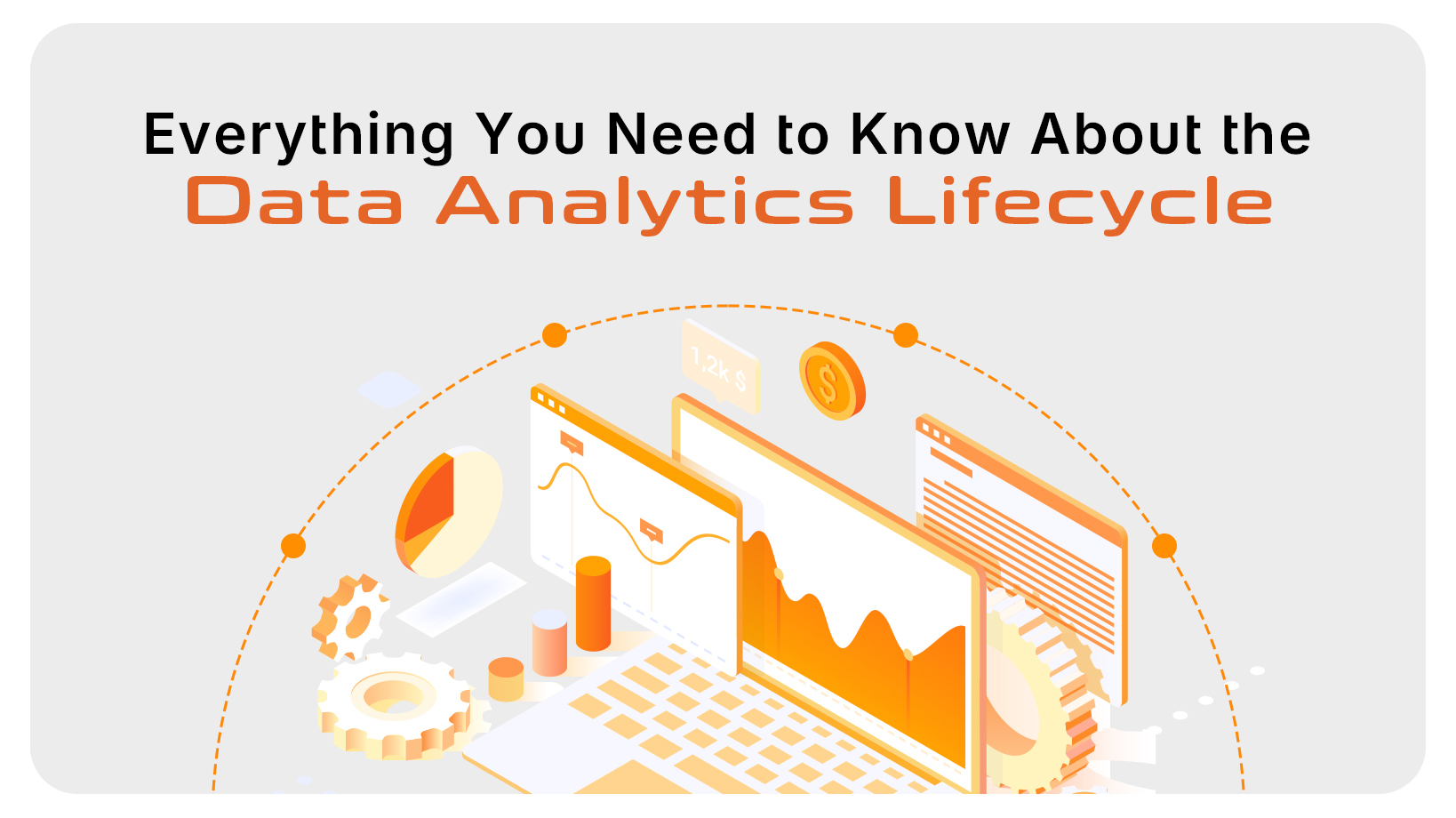
This article will help you understand everything you need to know about the data analytics lifecycle. After that, you will be able to optimize current operations, identify potential opportunities, and solve complex problems in your business.
Understanding Data Analytics Lifecycle
Before we jump to the data analytics life cycle, let’s learn what is data analytics. It is a field with multiple disciplines, having a wide range of techniques to analyze data and draw results. The disciplines in this field are mathematics, statistics, and computer science.
Often abbreviated as ADLC, the data analytics lifecycle refers to the way you generate, collect, process, use, and analyze data to achieve your business goals. Wondering about the ADLC meaning? ADLC (Analytics Development Life Cycle) means structuring an arrangement to convert raw data into useful information that helps you complete projects.
A data analytics lifecycle guides leaders and business owners and facilitates them with strategies to extract information and move towards the right direction. Data analysts utilize the representation of the lifecycle with the aim of data analysis in a backward or forward direction.
After they draw findings, the life cycle helps them decide whether they should proceed with the same strategy or make any changes. The cycle starts from the discovery of the problem and stretches to implementing solutions. The next section of the blog is all about the 6 phases of data analysis.
Data Analytics Life Cycle Diagram
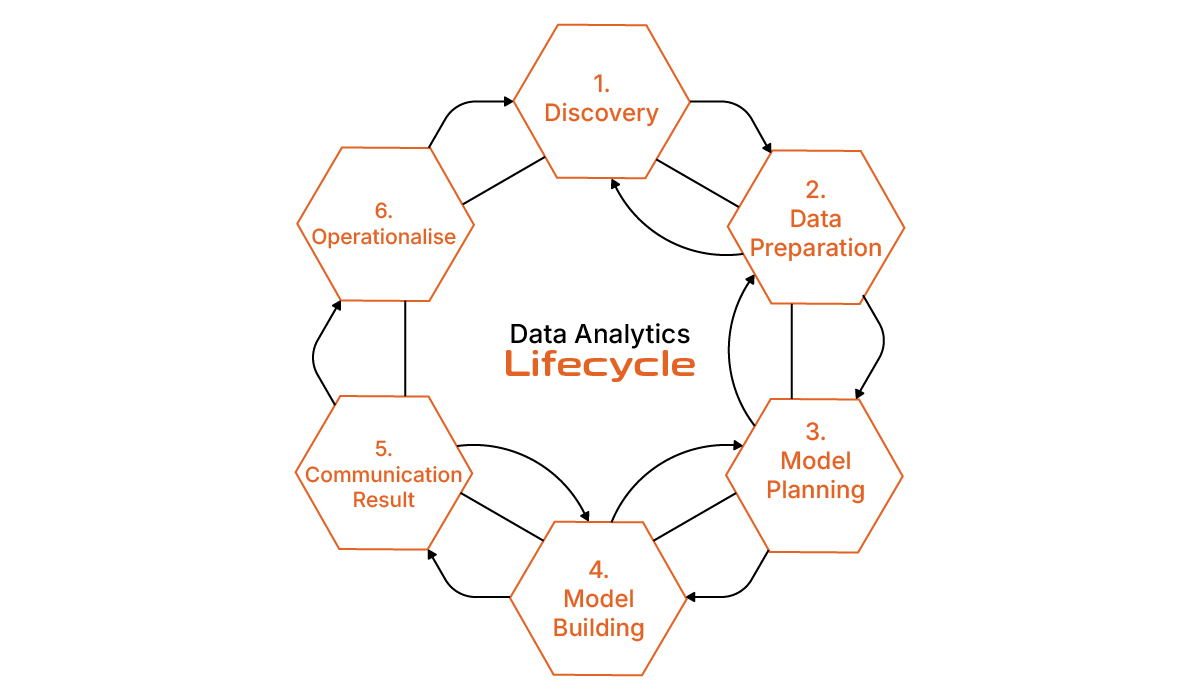
6 Phases of Data Analysis
Now you might be thinking, Why should I learn about the 6 phases of data analysis? It is because these phases will help you identify big data problems related to your project. These phases outline a step-by-step process and help you derive practical data insights. At each phase, you ensure that the raw data is converted into a meaningful finding that facilitates effective decision-making.
The six phases that form the data analytics lifecycle are as follows:
Phase 1: Discovery of the Problem
The first phase is to identify the problem and investigate the possible causes behind it. Here, create context and understanding, and learn about the required sources of data that are readily available. In this phase, follow these steps:
- Define a clear and concise problem statement to get a lead and a clear picture of whether the problem is accurate.
- Discuss with your team members through a brainstorming session to identify the causes and consequences of the problem and draw a conclusion.
- Find the root cause of the problem that enables you to resolve the problem through data analytics.
Phase 2: Preparation of Data
This phase is all about finding the metrics you are going to measure. Here, try to figure out key performance indicators (KPIs), after which you will have a clear understanding of different processes. Do not forget the factors for consideration and concentrate on the main areas. Next, collect information, including the data location and how you will store, move, and share it. Make sure to protect data through security measures.
- Follow the steps to preprocess and condition the data before making any analysis.
- Transform data after execution and loading
- Use relevant tools to prepare data and perform tasks without defining an order.
Phase 3: Planning the Model
In this phase, study data to find variables and select the important ones. Then, create data sets that test data, produce it, and train goals. Track the progress and develop models on the basis of that progress. Deploy the model followed by these practices:
- Identify mistakes in data using tools, and if found, collect complete information by figuring out the source.
- Remove data inconsistencies, duplication, and errors.
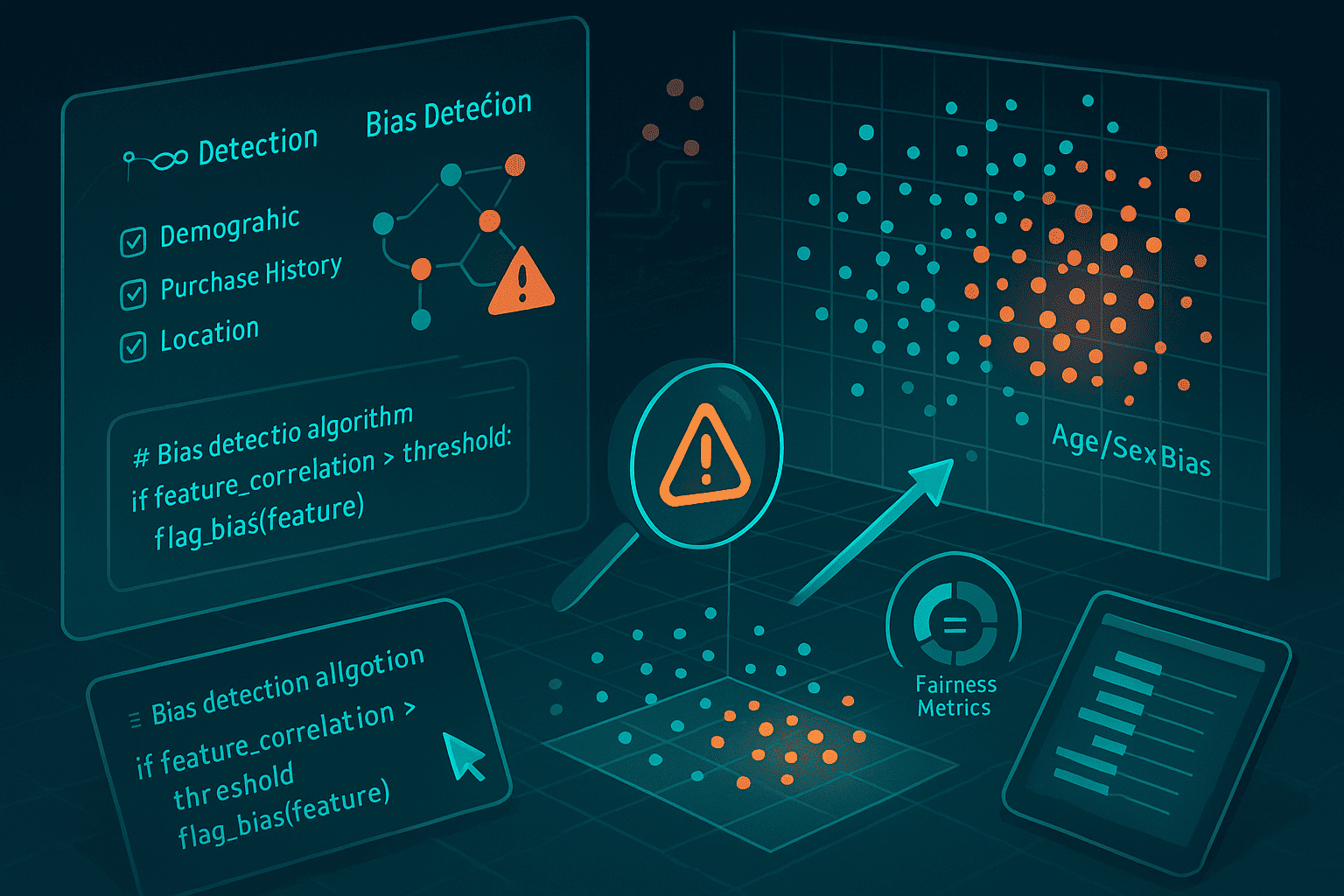
- Identify and solve the actual problem by checking if the data is biased.
Phase 4: Building the Model
Once you identify the problem, prepare data, and plan a model, create datasets. Train, test, and produce the model, and ensure that the tools you are already using are enough to run the model.
- Select algorithms and prepare a dataset to create models.
- Feed models through the training dataset and train them to learn patterns.
- Use a test dataset and validate the performance of the model.
- Check parameters, adjust them, repeat the process, and refine the model to reach accuracy.
Phase 5: Communication of the Result
This is where you analyze the model outcomes and create criteria for failure and success. Assess the ways of presenting results to stakeholders. In this phase, you:
- Use charts, dashboards, and graphs to visualize results and create a better understanding.
- Make the most of an actionable and concise layout for the presentation of the key findings.
- Recommend actions based on data analysis.
- Create a complete report discussing all aspects related to data analysis, key findings, and results.
Phase 6: Operationalization
The last phase of the data analysis life cycle is operationalization, where you convey the benefits of the projects more widely. Remember, you need to control the project deployment before you expand it. Go through the final reports and codes, and analyze the performance. Deploy the project only when you are satisfied that everything is in place.
- Integrate the model into business processes.
- Automate predictions and decision-making based on results.
- Monitor the performance continuously for relevancy and accuracy of the new data sets.
- Keep updating data to stay relevant with changing data trends. Record deployment and maintenance in a document for long-term use.
Data Lifecycle Management
Understanding the concept and process of the data analytics lifecycle is incomplete without learning the concept of managing the data life cycle. It is an approach where you manage the data flow in an information system from the beginning of its lifecycle till the end. In the case of the big data life cycle, you can make the most of analytics for IoT and manage data.
The goal of Data Life Cycle Management (DLM) is to keep the data secure and confidential, integrate it, and make it readily available when needed. In short, it performs the following tasks:
- Automates the process by organizing data into separate categories.
- Automates data migration from one category to another
- Stores frequently assessed new data on more expensive and faster storage media
- Stores less critical data on slower and cheaper media
AI Data Analysis
In the era of emerging AI trends, how can we not talk about AI for data analysis? The data is growing day by day, and it is consuming more time to analyse and store it. This is where the AI data analysis technique works. These techniques extract useful insights from large amounts of data sets. A few examples of AI data analytics are:
| Technique | What it does |
| Natural Language Processing (NLP) | Extracts insights from data that is in an unstructured form. |
| Deep Learning | Uses neural networks for time-series analysis, recognition, and more. |
| Machine Learning Algorithms | Make predictions or extract patterns. |
Final Thoughts
The data analytics lifecycle aims to deliver a tested and verified strategy to convert raw data into meaningful outcomes for the business. Once you understand and apply each phase, you can ensure the competitiveness, accuracy, and impact of your projects. Keep your data secure and process it efficiently to help you make effective decisions.
FAQs
What is ADLC in data analytics?
ADLC (Analytics Development Life Cycle) is the structured process converting raw data into actionable insights through 6 phases.
How does AI enhance data analysis?
AI techniques like NLP and deep learning automate insight extraction from massive datasets, reducing analysis time by 70%.
Written by
Marketing